Some documents from the Department of Typography & Graphic Communication at Reading University came to light recently in a sort-out of papers. Shown here are two photos, both from summer 1975. The first shows the whole of the department – students and teaching staff – or, all who were present on that day. The second shows the teaching staff on the day they met to discuss the final-year students’ work and decide on degrees to be awarded.
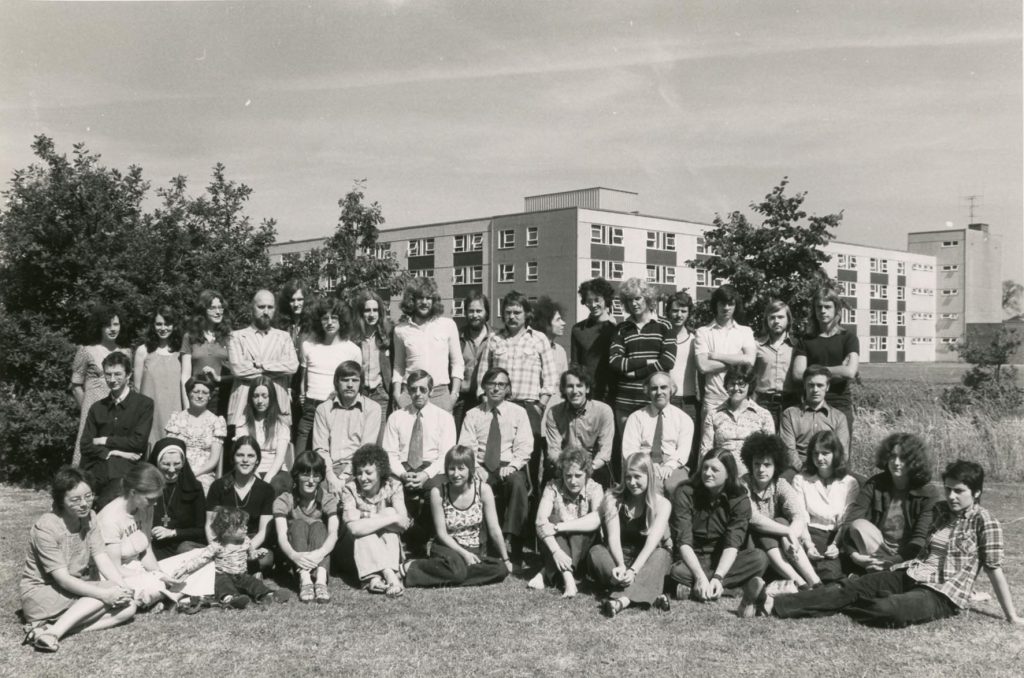
Students and staff, summer 1975, in front of Bridges Hall of residence. Among them are: (back row) Sue Walker, Martin Blampied, Martin Andrews, Paul Stiff; (sitting on chairs) RK, Mick Stocks, Cliff Morris, Michael Twyman, Richard Southall, Paddy O’Neill, Brenda Tucker; (sitting on the grass) Sister Sarah Clarke, Ann Grove-White.
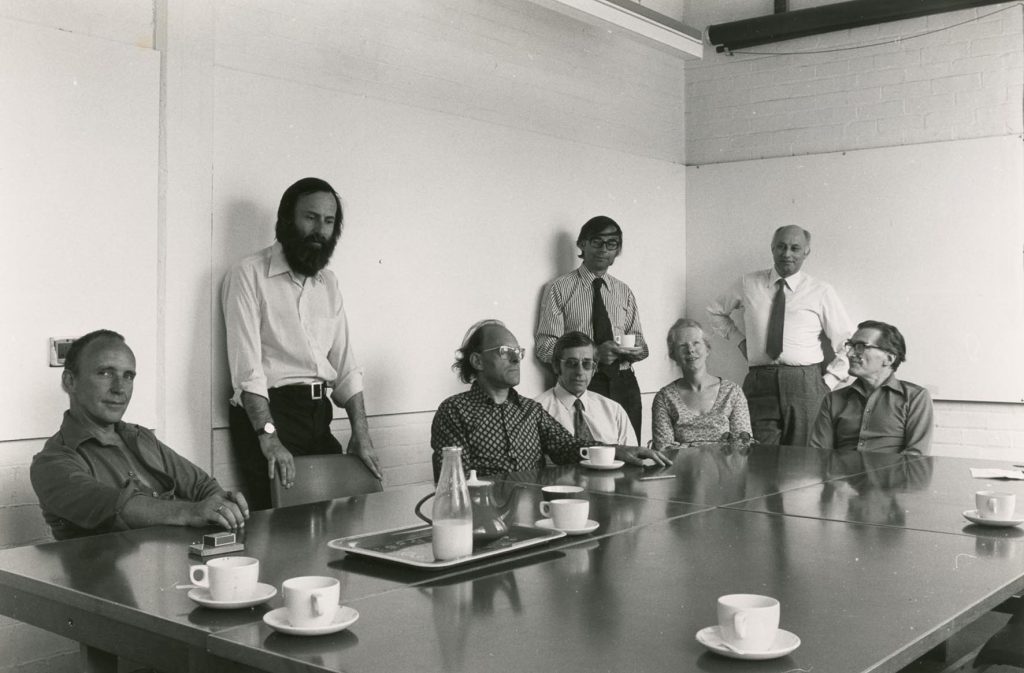
Teachers, summer 1975: Ken Garland, James Mosley, Ralph Beyer, Cliff Morris, Michael Twyman, Gillian Riley, Ray Roberts, Ernest Hoch.
1975 was the year that I graduated from the department. Our group of students was unusually small (essentially there were five of us, sometimes just four), and we worked together a lot on projects. At one point we asked if we could not be given individual degrees but be judged just as a year-group. That was the spirit of the times. I remember that Ernest Hoch and Michael Twyman listened sympathetically, but said that this would be impossible for the university authorities.
A few years later, still in the politically hot 1970s, two of the brightest students, who had completed all the work required, chose not to display anything in their final displays and instead posted a statement of their political position: left-libertarian. The teachers agonized about this, but felt they had to follow the rules, and so failed these students. (By then I had joined the staff as a part-time teacher, and was in on these deliberations.)
—————
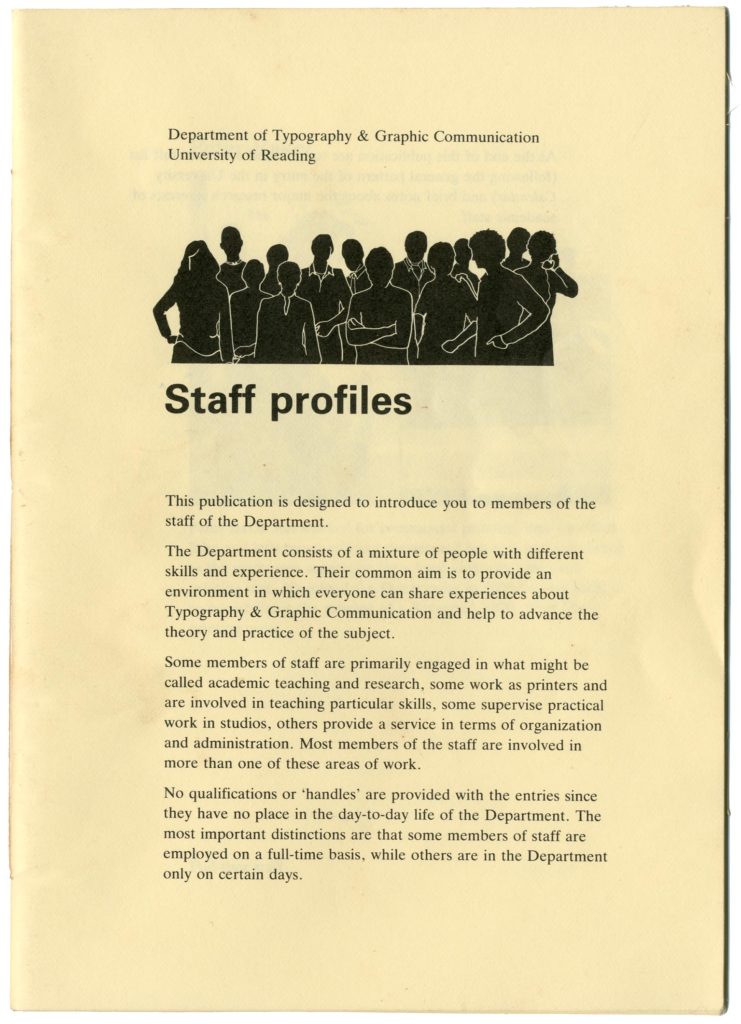
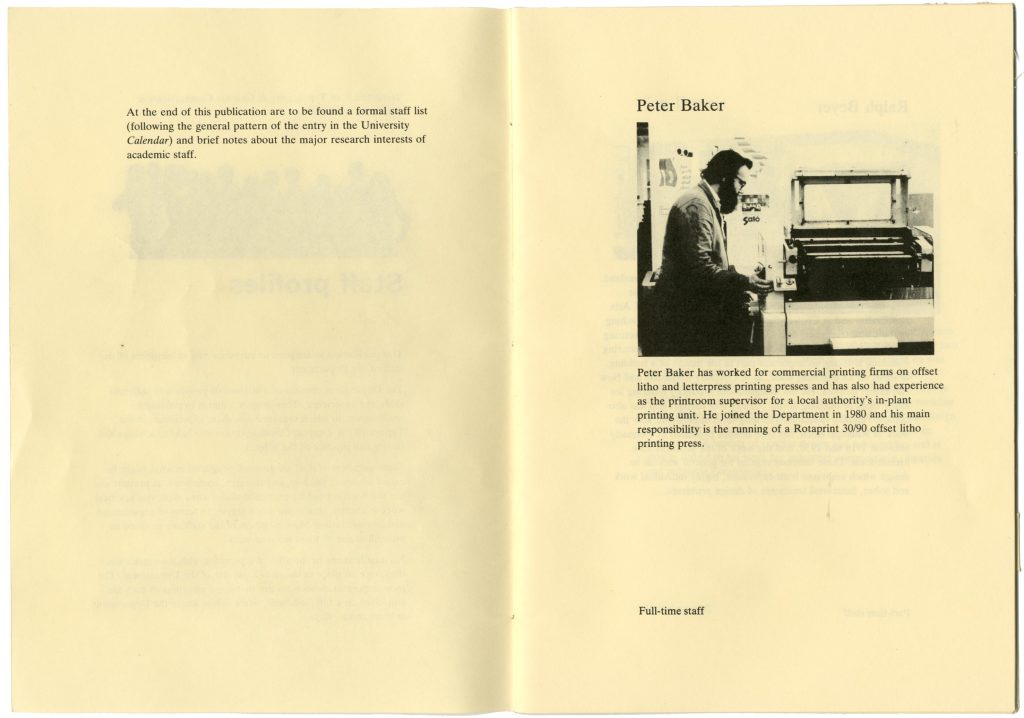
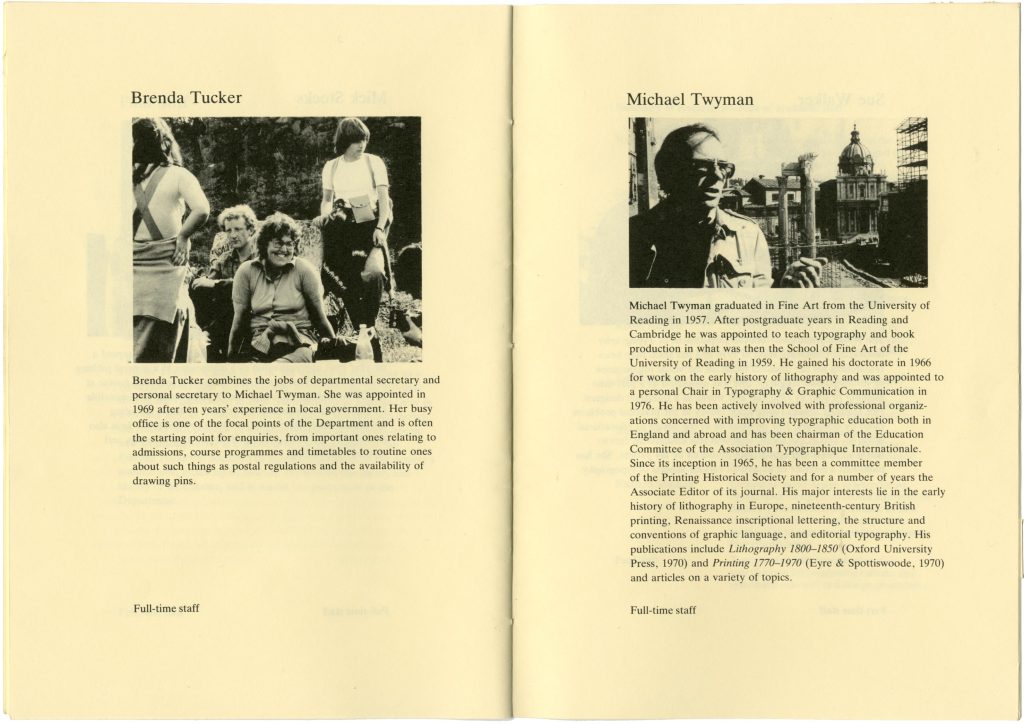
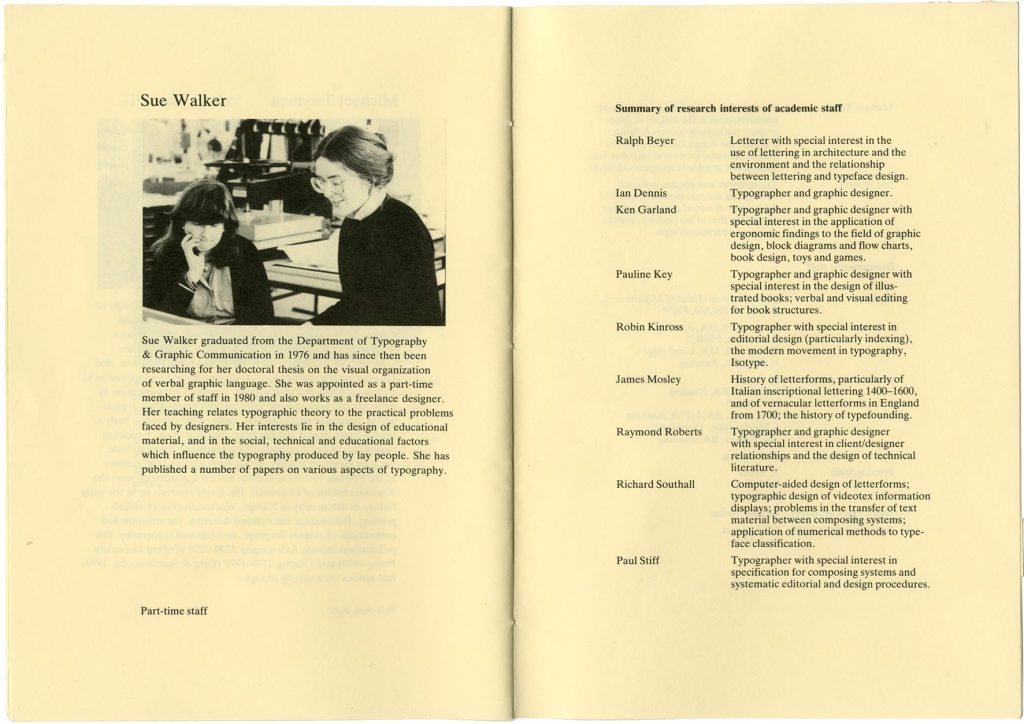
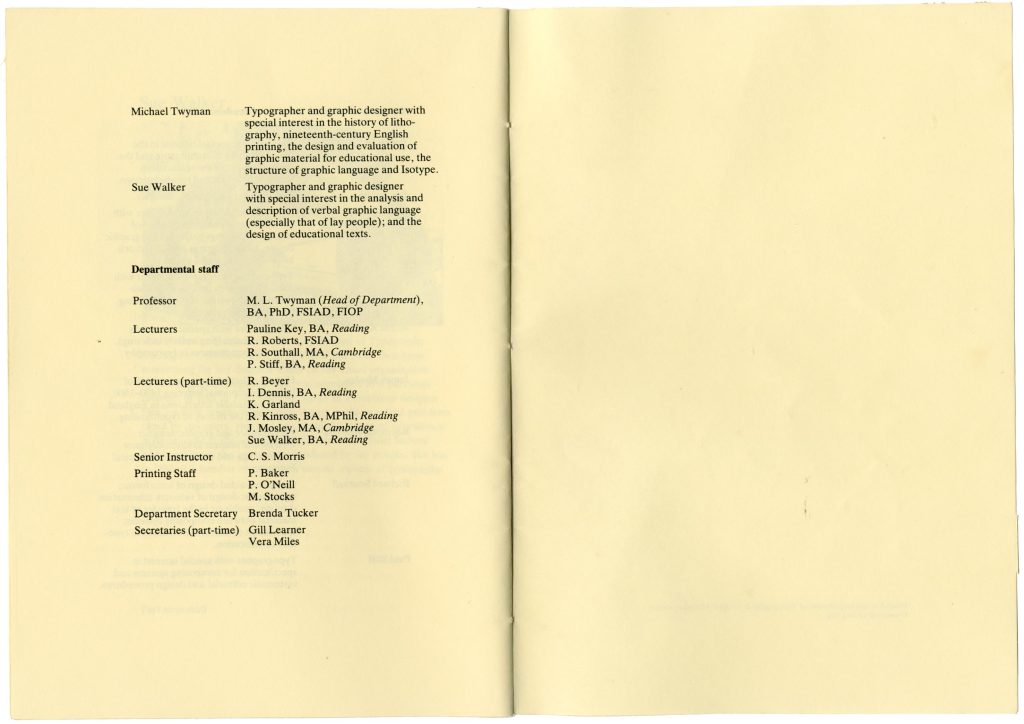
Pages from a booklet about the department, c. 1980.
The booklet about the staff dates from this time, around 1980. It now strikes me as a remarkable document, and also a true indicator of the best of the department in those times. Staff of all kinds – teachers, printers, secretaries – are listed in alphabetical order. As the introductory text explains, titles have been dropped. We were all together, occupying one end of an elongated, modular prefabricated structure (dating from the Second World War), away from the main buildings on the campus. We had our own printing presses, typesetting, and plate-making equipment.1 Of course, hierarchies and lines of authority were there. Certainly, most decisions went through Michael Twyman, whose creation this was. But this was as near as I have experienced to an ideal situation of work, mutual education, and social co-operation. That all this was possible was, in the first place, his achievement.
————————————————————
Robin Kinross
————————————————————
Note
- I suspect that this booklet was printed on a recently acquired small-offset press, perhaps even as a test of it: this would have been the first offset press in the department, and the processing of the photos here was not good. Peter Baker, shown at the start of the booklet, was in charge of that press and had only recently joined the staff.